



Weighted Jump Rope Benefits + How to Choose the Right Rope Weight

Weighted jump ropes aren’t just “harder jump ropes.” The right weight changes how your whole body works: your rhythm, timing, upper-body engagement, and how quickly your heart rate climbs.
This guide covers:
-
the real benefits (and what’s hype)
-
how to choose the right rope weights (yes, more than one is better)
-
a simple 3-level progression plan
-
how to match your goals to the right Crossrope setup (without needing to be a rope nerd)
Quick article summary:
• Weighted ropes improve rhythm and coordination
• They increase upper-body engagement
• Beginners should start around ¼–½ lb
• Heavier ropes (1–2 lb) work best for short conditioning intervals
What is a “weighted” jump rope?
| A weighted jump rope is a rope where the cable itself adds resistance, typically between ¼ lb and 2 lb. The added weight increases upper-body engagement, improves rhythm and timing, and raises heart rate faster than a standard speed rope. |
I've seen a lot in my 20+ years of jump rope training, and weighted ropes are one of the most underutilized and most misunderstood forms of training.
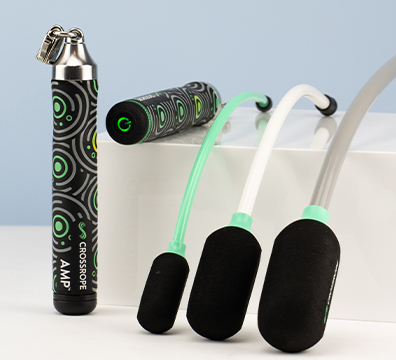
A weighted jump rope usually means the rope/cable itself is heavier (not just the handles). A heavier rope gives you more feedback in the air and more resistance every turn.
Quick note on handles: Some brands add weight to handles. That can increase forearm fatigue, but it often doesn’t improve the quality of the rope turn the way a heavier rope does, because the resistance isn’t evenly distributed.


5 benefits of a weighted jump rope (the legit ones)
1) Better rhythm, timing, and rope control
A heavier rope is easier to “feel,” which helps you sync hands + feet. That immediate feedback is one reason coaches like jump rope as a coordination tool. Research on rope-jump training has found improvements in coordination/proprioception measures in athletes, and at least one study reported greater coordination gains in a weighted-rope group versus a standard rope group.
Translation: you trip less, your form cleans up faster, and you build a smoother cadence.
2) More upper-body involvement (without needing a gym)
With a speed rope, your shoulders/upper back can “coast.” With a heavier rope, your arms and upper back have to work to keep the rope moving, especially as fatigue sets in. Recent research has also explored weighted jump-rope training for shoulder strength adaptations.
3) Higher heart-rate response in less time
Weighted rope intervals tend to spike heart rate quickly. That doesn’t mean it’s “pure anaerobic” (your body uses both systems), but it does mean you can get a very dense conditioning effect in short sessions. Anaerobic work is short, high-intensity bursts (simplified), while aerobic supports longer sustained efforts.
4) Strength-endurance you can actually feel
The best way to describe heavy-rope work is strength-endurance + cardio at the same time:
-
grip endurance
-
shoulder endurance
-
trunk stability
-
calves and foot/ankle stiffness (build carefully)
- high calorie burn
5) Better adherence (it’s weirdly motivating)
This one is underrated: weighted rope sessions feel “substantial,” even if they’re short. That’s a big deal if your real goal is consistency.

How to choose the right weighted jump rope
Step 1: Pick your “training outcome”
-
Fat loss / conditioning: moderate weight you can sustain with good rhythm
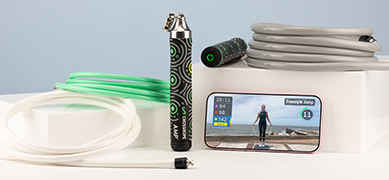
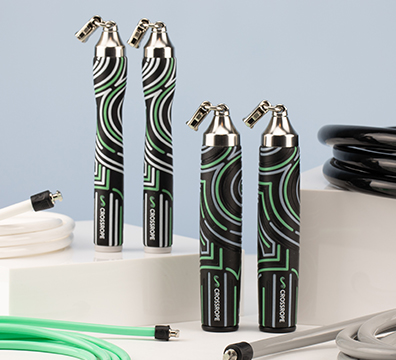
Best Options: AMP Set or Get Lean Set (there are Ropeless Options too)
-
Strength-endurance / power feel: heavier rope in intervals
Best Options: AMP Set or Get Strong Set
-
Skill / double-unders: lighter rope (save this for later unless you already have the skill)
Best Options: Speed Performance Set or Bolt Set
|
Experience Recommended Rope Weight: Beginner = ¼–½ lb Intermediate - ½–1 lb Advanced 1+ lb |
Read more: How often should you jump rope each week?
Step 2: Start with lower jumping volume than your ego wants
If you haven’t jumped consistently for a while, going too heavy too fast is the fastest path to shin/calf/Achilles soreness.
A practical rule:
-
Start with a weight you can jump 30–60 seconds with clean rhythm
-
If you “muscle” the rope with your shoulders or lose timing immediately, it’s too heavy for today
Step 3: Choose the feel (material + handles)
What matters:
-
smooth rotation
-
consistent feedback
-
comfort in hands
-
durability on your surface (garage concrete destroys a lot of ropes—use a mat if you can)
Beginner → Advanced progression plan (simple + effective)
Level 1: Base (2–3x/week, 10–15 minutes)
Goal: build rhythm, calves tolerance, and consistency
-
10 rounds: 30 sec jump / 30–60 sec rest
-
Stop a set early if your form collapses
Level 2: Build (2–3x/week, 12–18 minutes)
Goal: heavier rope intervals + heart-rate density
-
8 rounds: 45 sec jump / 30–45 sec rest
-
Optional finisher: 3 rounds of 20 sec hard / 40 sec easy
Level 3: Performance (2–3x/week, 15–25 minutes)
Goal: mix heavy intervals + speed cadence
-
Block A (heavy): 6 rounds 30 sec hard / 45 sec rest
-
Block B (lighter): 6 rounds 45 sec smooth / 20 sec rest
4-Week Beginner Weighted Jump Rope Plan
Week 1 - 10 rounds: 30 sec jump / 30 sec rest
Week 2 - 12 rounds: 30 sec jump / 20 sec rest
Week 3 - 8 rounds: 45 sec jump / 30 sec rest
Week 4 - 10 rounds: 45 sec jump / 20 sec rest
Common mistakes (that kill results)
-
Going heavy on day 1 and wondering why your calves revolt
-
Jumping too high (keep it low and springy)
-
Using a rope that’s too long (causes timing issues + shoulder fatigue)
-
Training on abrasive surfaces without a mat

How Crossrope Can Help
Crossrope is built around progression: change the resistance as your skill and conditioning improve, without re-learning a totally different rope each time.
If your goal is fat loss + conditioning: start with a moderate rope you can sustain cleanly, then progress heavier as you adapt.
If your goal is strength-endurance: use heavier rope intervals (short work bouts, controlled rest).
If you want structure and accountability: pair your rope work with guided training and tracking (especially if you’re the “I’ll work hard if a plan exists” type).


FAQ
Are weighted jump ropes good for beginners?
Yes - if you start with a manageable weight and short intervals. They can actually make timing easier because you feel the rope better.
Do weighted jump ropes build muscle?
They build strength-endurance (especially shoulders/arms/grip) and can support strength adaptations when programmed consistently, but they’re not a substitute for heavy resistance training.
Is a weighted rope “anaerobic”?
Jump rope can include both aerobic and anaerobic work depending on intensity and rest. Anaerobic is typically described as short, high-intensity bursts (simplified), while aerobic supports sustained work.
How long should my weighted jump rope workouts be?
10–20 minutes is plenty if intensity is real. Consistency beats marathon sessions.
How heavy should a jump rope be?
Most beginners should start with a rope between ¼ and ½ lb.
This provides enough feedback for rhythm and control without excessive shoulder fatigue. As coordination improves, many athletes progress to 1 lb or heavier ropes for conditioning and strength endurance.
Are Ropeless Jump Ropes as good as normal weighted jump ropes?
Ropeless weighted jump ropes deliver a legitimate, effective workout. The science backs it up, the calorie burn is comparable, and for many people, they may be the smarter choice. Learn more.


Related Articles


