



The Right Jump Rope for Every Goal

Quick Answer: The right jump rope depends on what you're training for, not just your budget. Weighted ropes are the best starting point for most people, including beginners. Ropeless is the right call if you're short on space or can't jump. PVC and freestyle ropes are built for tricks. Beaded ropes hold up outdoors. Speed ropes are for double unders and fast cardio work. Each type has a real job to do.
- Weighted rope: Best for beginners and upper body resistance training (Crossrope Get Lean Set)
- Ropeless: Best for small spaces, low ceilings, or injury recovery (Crossrope Ropeless)
- PVC / Freestyle: Best for tricks, crosses, and freestyle footwork (jumprope.com Freestyle Rope)
- Beaded: Best for outdoor training and durability on rough surfaces (jumprope.com Beaded Rope)
- Speed / cable rope: Best for double unders, CrossFit, and high-rep cardio (jumprope.com Speed Rope)
Most people pick up a jump rope the same way they'd pick up a resistance band at the gym: grab whatever's nearby and assume they all work the same. They don't. A speed rope and a weighted rope are designed to do fundamentally different things, and buying the wrong one for your goals is one of the most common reasons people give up on jump rope training early.
This guide covers every major rope type, what each one is actually built for, and who should buy it. A few of these recommendations point away from Crossrope entirely, because the honest answer matters more than the sale.

Weighted Rope: The Best Starting Point for Most People
Weighted jump ropes are the most misunderstood category in the sport. They're commonly assumed to be an advanced training tool, something you graduate to after you've already learned to jump. That assumption is backwards.
Why Weighted Ropes Are Easier for Beginners
A heavier rope rotates more slowly than a thin speed rope. That slower rotation gives you more time to time your jumps, which is exactly what a beginner needs. A speed rope comes around fast, and if your timing is off by a fraction of a second, you catch it. A weighted rope is more forgiving. The physics work in your favor before your coordination has caught up.
This is one of the most consistent pieces of feedback from new jumpers: starting on a weighted rope rather than a speed rope shortens the learning curve. The rope gives you feedback through its weight, and the slightly slower pace lets you build rhythm before you build speed.
Why Experienced Jumpers Use Them Too
Once you're past the learning curve, weighted ropes shift from a beginner tool to a resistance training tool. The added weight engages your shoulders, arms, and core in a way that a speed rope simply doesn't. A 1 LB or 2 LB rope turns a jump rope session into a genuine upper body workout alongside the cardio. That's a meaningful difference if building strength is part of your goal.
Weighted ropes are the most versatile category for this reason: they work on day one and they keep working as your fitness improves.
The Crossrope System
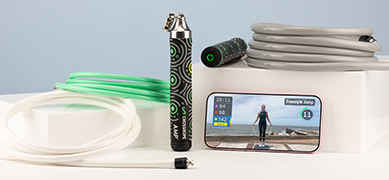
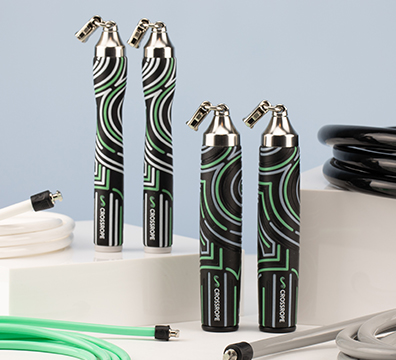
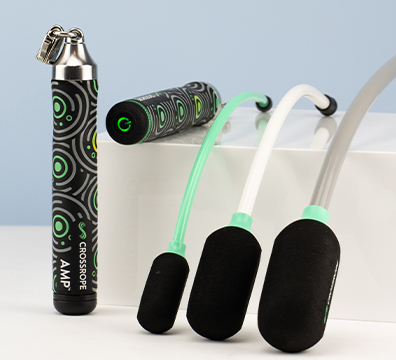
The main reason Crossrope has built its reputation around weighted ropes is the interchangeable handle system. Rather than buying a separate rope for each weight, one set of handles clips into multiple rope weights, from 1/4 LB all the way up to 2 LB. You can start light and add resistance as your fitness grows without replacing your equipment.

Crossrope Get Lean Set
Includes Slim Handles with 1/4 LB and 1/2 LB ropes. The most popular entry point for beginners and cardio-focused jumpers. Trusted by hundreds of thousands of jumpers with a 4.8-star average rating.

Crossrope Get Strong Set
Includes Power Handles with 1 LB and 2 LB ropes. Designed for strength-focused training and experienced jumpers ready to add serious resistance.
All Crossrope handles use a Fast Clip connector that lets you swap ropes in seconds. If you want the full progression path from beginner to advanced in one purchase, the Get Fit Bundle combines both sets.
Ropeless Jump Rope: When a Physical Rope Gets in the Way
Ropeless jump ropes replace the rope with short weighted attachments on the handles. You go through the full motion of jumping rope without anything spinning overhead or hitting the floor.
Who Should Use One
Ropeless ropes are the right call in a few specific situations:
- Low ceilings: A standard jump rope needs at least 10 to 11 feet of clearance. Apartments, basements, and hotel rooms often don't have that. Ropeless eliminates the ceiling problem entirely.
- Can't jump yet: People recovering from foot or ankle injuries, or those with joint limitations, can still get the arm motion and cardiovascular work without the impact of jumping.
- Noise-sensitive spaces: Rope on hardwood at 6 AM is loud. Ropeless is quiet.
- Travel: The handles pack flat. No rope to untangle.
The workout is real. The arm motion mimics a traditional rope closely enough that cardiovascular conditioning and shoulder endurance carry over. It is not a replacement for rope training if you want to develop jumping skill or do double unders, but as a conditioning tool it holds up.

Crossrope Ropeless Set
Available as a standalone set or as an add-on to existing Crossrope handles. The weighted pods provide resistance comparable to the rope weights in the standard lineup.
PVC and Freestyle Ropes: Built for Tricks and Footwork
PVC ropes are thicker and slightly heavier than speed ropes, which gives them a more defined arc as they spin. That arc matters when you're doing crossovers, side swings, or any movement where you're actively shaping the rope mid-rotation.

What PVC Does That Speed Ropes Can't
Speed ropes are so thin and light that they collapse quickly when they lose momentum. PVC ropes maintain their shape longer, which makes them forgiving for complex footwork and freestyle sequences. If you've ever tried to learn a criss-cross with a wire speed rope and had it collapse on you, this is why.
PVC is also more durable on rough surfaces than cable rope. It handles abrasion from pavement or gym floors better than thin steel wire.
If freestyle training or jump rope performance is your primary goal, a dedicated PVC or freestyle rope is worth having even if you already own a weighted set. They do different jobs. jumprope.com's Freestyle Rope is a well-regarded option built specifically for this style of training.
Beaded Rope: The One That Belongs Outside
Beaded ropes are made of segmented plastic beads threaded onto a cord. They're slow, they're heavy, and they're almost indestructible on rough surfaces. None of those are weaknesses when you're jumping on a parking lot, playground, or any surface that would destroy a cable rope in a week.

Why Beaded Ropes Work Outdoors
Cable and PVC ropes both wear down quickly on concrete and asphalt. The rope hits the ground hundreds of times per session, and abrasive surfaces tear through thin cable and PVC in a fraction of the time it takes to wear out a beaded rope. Beaded ropes shrug off pavement.
They also hold their shape in wind, which matters more than you'd expect when jumping outside. A thin speed rope becomes unpredictable in any kind of breeze. A beaded rope stays on course.
Tradeoffs to Know
Beaded ropes are not speed tools. They're slow, and they won't help you build toward double unders or high-rep cardio. They're also louder than cable ropes. But for outdoor training, kids learning to jump, or anyone who wants a rope that survives years of concrete use, beaded is the most durable choice on the market.
Crossrope does not make a beaded rope. For this category, jumprope.com's Beaded Rope is a solid pick. The priority here is durability and surface compatibility, and it delivers on both.
That said, you don't have to default to beaded just because you're jumping outside. Any rope type can work outdoors if you're using a good mat. A quality mat protects the rope from abrasive surfaces, cushions your joints, and extends the life of your equipment significantly. The Crossrope Jump Rope Mat is designed for both indoor and outdoor use and works with any rope in the lineup.


Crossrope Jump Rope Mat
Protects your rope and your joints on any surface. Works indoors or outside. If you're jumping on concrete, asphalt, or hardwood regularly, this is worth having.
Speed Rope: For Double Unders and Fast Cardio Output
Speed ropes are thin wire or cable ropes with lightweight handles designed to spin as fast as possible with as little air resistance as possible. They're not built for beginners, and they're not built for resistance training. They are built for one thing: speed.

Who Speed Ropes Are For
If you're training for double unders, working through CrossFit programming, or trying to maximize jump repetitions per minute, a speed rope is the right tool. The thin cable comes around fast and consistently, which is exactly what high-rep speed work requires.
What Speed Ropes Are Not
Speed ropes are unforgiving for beginners. The same speed that makes them great for advanced work makes them frustrating when your timing isn't locked in yet. They also provide essentially no upper body resistance, so if strength or conditioning is the goal alongside cardio, a weighted rope will serve you better.
For dedicated speed work and double unders, jumprope.com's Speed Rope is a well-regarded option at a straightforward price point. It's purpose-built for the category and worth considering if fast cardio or DU training is your primary goal.
Side-by-Side: Which Rope Type Is Right for You
| Rope Type | Best For | Not Ideal For | Where to Start |
|---|---|---|---|
| Weighted | Beginners, upper body resistance, full-body conditioning | Double unders, max-speed cardio | Crossrope Get Lean Set |
| Ropeless | Small spaces, low ceilings, injury recovery, quiet environments | Building jump timing, double unders | Crossrope Ropeless Set |
| PVC / Freestyle | Tricks, crossovers, freestyle footwork, durable surface use | Speed training, beginner cardio | jumprope.com Freestyle Rope |
| Beaded | Outdoor use, concrete and asphalt, kids, pure durability | Speed work, weighted training | jumprope.com Beaded Rope |
| Speed / Cable | Double unders, CrossFit, high-rep speed cardio | Beginners, strength training | jumprope.com Speed Rope |
Common Questions
Is a weighted jump rope harder to use than a regular rope?
Counterintuitively, weighted ropes are often easier for beginners to learn on. The added weight slows the rope's rotation slightly, giving you more time to time your jumps. Thin speed ropes come around faster and require more precise timing, which makes them harder to start with despite feeling lighter.
What jump rope should a complete beginner buy?
A weighted rope in the 1/4 LB to 1/2 LB range is the best starting point for most beginners. It provides enough weight to slow the rotation and make timing easier, while still being light enough for long sessions. The Crossrope Get Lean Set is widely considered the best entry point in this category, offering two rope weights and a handle system that scales with your fitness.
Can ropeless jump ropes replace a real rope workout?
Yes, if you're jumping. Ropeless training replicates the full jump rope motion and delivers comparable cardio, shoulder endurance, and conditioning. It also has a real advantage: no rope means no tripping, which removes one of the most common frustrations in jump rope training. And if jumping isn't an option for you (low ceiling, joint issue, noise-sensitive space), you can still bounce in place or simply stand and rotate the handles for an upper body conditioning workout. The ropeless format is more flexible in that sense, not less.
What's the best jump rope for double unders?
If you're learning double unders, lighter weighted ropes like the 1/4 LB and 1/2 LB work well. The weight gives you enough feedback to feel the rope's timing as you build the skill. Once you're consistently hitting them and want to push your speed further, a dedicated speed rope is the better tool. jumprope.com's Speed Rope is a solid option for that next level.
Are weighted jump ropes worth the higher price?
If you're buying a rope to actually train with, yes. What you're paying for is a full-body workout you'll actually stick with and get results from. Weighted ropes are more engaging than a standard rope, more effective for conditioning, and they progress with you as your fitness improves. Cheap ropes also break, kink, and lose their bearings quickly. A quality weighted rope like Crossrope's system is built to last, comes with a lifetime warranty on the handles, and scales from beginner to advanced without buying new equipment. The price difference is real, but so is the durability gap. A $10 rope that breaks in six months costs more in the long run than a set that lasts a decade.
Do I need more than one type of jump rope?
Most people don't. A weighted rope covers the majority of training needs from beginner cardio through strength conditioning. The cases where a second rope makes sense: you're actively learning freestyle tricks (add a PVC or freestyle rope), you're training outdoors on concrete regularly (add a beaded rope), or you're specifically pursuing double unders and CrossFit speed work (add a speed rope).
Still not sure which rope fits your situation? The full Crossrope buyer's guide goes deeper on product recommendations across every fitness goal, or browse the full lineup of sets to compare options directly.

Related Articles


