



Is Jumping Rope Low Impact? | Weighted Jump Rope Guide

When you think of jumping rope, you probably don't think of a low-impact workout. After all, you're literally jumping.
But jumping rope can be a relatively low-impact form of cardio when performed with proper technique. You don't need to jump high or move at a frantic pace to get an effective workout. And adding a weighted jump rope can make the workout more challenging without requiring you to increase your jump height.
For anyone looking for a low-impact cardio workout, joint-friendly exercise, or an alternative to running, weighted jump rope is worth considering.
TL;DR
Yes, jumping rope can be a relatively low-impact workout. The key is proper technique. Keep your jumps low, land softly, and maintain a controlled pace. A weighted jump rope can increase resistance and workout intensity without requiring you to jump higher or move faster.
Is Jumping Rope Low Impact?
Yes, jump rope can be low impact, but how you jump matters.
Low-impact exercise generally refers to activities that place less stress or strain on the joints. Activities such as cycling and swimming are considered very low impact because they don't involve repeated landings. Running and jumping activities, on the other hand, involve more ground impact.
Jump rope falls somewhere in between.
An efficient jump rope bounce is small and controlled. You only need enough height for the rope to pass underneath your feet. You then land softly on the balls or midsoles of your feet with a slight bend in your knees before immediately rebounding into the next jump. You want to this landing to be soft and quiet.
That means you can get the cardiovascular benefits of a jumping workout without taking big, forceful jumps.
The goal isn't to jump high. It's to jump efficiently.
Why Jump Rope Doesn't Require Big Jumps
One of the biggest misconceptions about jumping rope is that you need to jump several inches off the ground.
You don't.
For a basic jump, you generally only need to clear the rope by a small amount. Keeping your jump low reduces unnecessary movement and helps you maintain a consistent rhythm. Crossrope's jump rope technique guidance recommends keeping the jump roughly 1 to 2 inches off the ground, with slightly bent knees and soft landings.

A few technique cues can make a big difference:
-
Keep your jumps low.
-
Land softly on the balls or midsoles of your feet.
-
Keep your knees slightly bent.
-
Keep your core engaged.
-
Let your wrists turn the rope instead of making large circles with your arms.
-
Stay relaxed and maintain a comfortable pace.
The more efficient your technique becomes, the less you need to exaggerate the movement.
Read more: Common jump rope mistakes
Does a Weighted Jump Rope Make Jumping More Impactful?
Not necessarily.
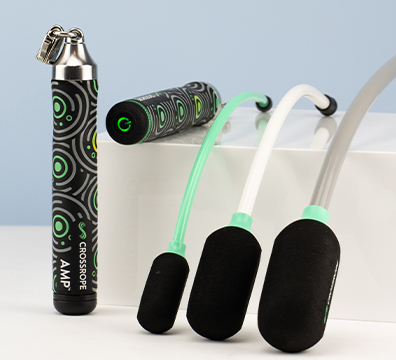
A weighted jump rope adds resistance to the movement, particularly through your hands, arms, shoulders, and core. This allows you to increase the challenge of your workout without necessarily increasing your jump height or speed.
That's one of the advantages of weighted rope training. With a lightweight rope, increasing intensity often means increasing your speed, jump frequency, or workout duration. A weighted rope can make each rotation more demanding without requiring you to simply jump faster.
In other words, you can increase resistance without increasing jump height.
That doesn't mean every weighted rope workout is low impact. A heavier rope can make the workout substantially more demanding, and your technique and conditioning still matter. Start with a weight appropriate for your fitness level and focus on maintaining good form.

Jump Rope vs. Running: Which Has Less Impact?
Both running and jump rope are weight-bearing cardiovascular activities, but they create impact differently.
Running involves a longer stride and repeated individual foot strikes. Jump rope uses a much smaller, more symmetrical bounce with frequent, brief ground contacts.
With good jump rope technique, the movement stays compact and controlled. You aren't launching yourself high into the air or taking long strides between landings.
That makes low-bounce jump rope an appealing alternative to running for people who want an effective cardio workout without running.
However, jump rope is still a jumping activity. It isn't appropriate for everyone, particularly people with certain injuries or conditions that make repetitive jumping uncomfortable.
How to Make Jumping Rope Lower Impact
If you're specifically looking for a low-impact jump rope workout, technique matters.
1. Keep your jumps low
You only need enough clearance for the rope to pass beneath your feet. Higher jumps aren't more effective. They simply create more time in the air and a larger landing.
2. Land softly
Avoid stiff-legged landings. Keep a slight bend in your knees and let your ankles, knees, and hips work together to absorb the landing.
3. Stay on the balls or midsoles of your feet
A soft, controlled landing helps distribute the forces of each bounce through your body rather than creating a hard heel strike.
4. Slow down
You don't have to jump as fast as possible to get a good workout. A slower pace can make it easier to maintain good technique while still elevating your heart rate.
5. Start with short intervals
If you're new to jump rope, start with short periods of jumping followed by recovery. Gradually increase your workout time as your body adapts.
6. Choose an appropriate rope weight
If you're new to weighted jump rope, start lighter. The goal is to add resistance while maintaining smooth, controlled movement, not to make every jump feel like a maximum-effort workout.

What If Jumping Isn't Comfortable?
If traditional jump rope isn't comfortable or practical for you, a ropeless jump rope can be another option.
Ropeless systems eliminate the need for a physical rope to pass underneath your feet. This can make them useful for people with limited space, beginners learning the movement, or anyone who wants to perform a weighted rope workout without worrying about catching the rope.
You still perform the jumping motion, and weighted ends can provide resistance through the upper body.
For some people, this can be a more approachable way to incorporate weighted rope training into their fitness routine.
Read more: The ultimate guide to Cordless/Ropeless Jump Ropes
Is Jump Rope Good Cardio?
Yes. Jumping rope is an aerobic activity that can elevate your heart rate and provide a challenging cardiovascular workout. The intensity can be adjusted by changing your pace, interval length, jump style, and rope weight.
That makes jump rope particularly useful when you're short on time or space.
You don't need a treadmill, bike, or large home gym. You need enough room to turn the rope and a surface that's appropriate for jumping.

The Bottom Line
Is jump rope low impact?
It can be. If you have proper technique.
Jumping rope isn't a zero-impact exercise, and it isn't automatically joint-friendly for everyone. But with proper technique, low jumps, soft landings, and an appropriate pace, jump rope can be an efficient and relatively low-impact form of cardio.
A weighted jump rope adds resistance without requiring you to jump higher or move faster, making it possible to increase the challenge while keeping your movement compact and controlled.
If you're looking for low-impact cardio, an alternative to running, or an effective home workout, don't rule out jumping rope simply because it involves jumping.
The key is to jump efficiently, not explosively.


FAQ: Frequently Asked Questions About Low-Impact Jump Rope
Is jumping rope considered low impact?
Jumping rope is not a zero-impact exercise because your feet repeatedly contact the ground. However, when performed with proper technique and a low, controlled bounce, jump rope can be considered a relatively low-impact form of cardio compared with higher-impact jumping and running activities.
Are weighted jump ropes low impact?
A weighted jump rope can be used for relatively low-impact training when you maintain proper technique, keep your jumps low, and choose an appropriate rope weight. The added weight increases resistance, but it doesn't require you to jump higher.
Is jump rope easier on your joints than running?
It depends on the individual and how each activity is performed. Running involves repeated strides and foot strikes, while efficient jump rope uses small, symmetrical bounces. Some people may find controlled jump rope more comfortable than running, while others may prefer lower-impact activities such as cycling or swimming.
How do you jump rope without hurting your knees?
Keep your jumps low, land softly with slightly bent knees, avoid stiff-legged landings, and focus on maintaining a relaxed, controlled rhythm. Start with short intervals and gradually increase your training volume.
If you experience persistent pain while jumping, stop and consult a qualified healthcare professional.
Read more: Is jumping rope bad for you knees?
Can beginners do low-impact jump rope workouts?
Yes. Beginners can start with short intervals at a comfortable pace and focus on learning proper technique before increasing workout duration or rope weight.
A lighter weighted rope or ropeless system can also be a useful starting point for learning the movement.
Read more: Jump rope for beginners
Is jump rope good cardio if you can't run?
Jump rope can be an effective alternative to running for cardiovascular training. It provides aerobic exercise without requiring the long strides associated with running, and you can adjust the intensity by changing your pace, intervals, and rope weight.
However, jump rope still involves repeated jumping, so people who cannot tolerate impact should consider lower-impact options such as cycling, swimming, or an elliptical.
Is jump rope good for people with joint pain?
It depends on the cause and severity of the joint pain. Jump rope is still a weight-bearing, jumping activity, so it may not be appropriate for everyone experiencing joint pain.
If jumping causes pain, don't try to push through it. Consider a lower-impact activity or speak with a healthcare professional about which forms of exercise are appropriate for you.
How high should you jump when jumping rope?
You only need enough height for the rope to clear your feet. For most basic jump rope techniques, this means keeping the bounce very low, generally around 1 to 2 inches.
Jumping higher doesn't make the workout better. It can simply make the movement less efficient and increase the height of each landing.
Related Articles


