



Strong at 57: How Melissa built Strength & Confidence with Weighted Jump Ropes

TL;DR: Melissa was a self-described clumsy tomboy who didn't find fitness until her early 30s. Nearly three decades later, she trains at 5:30 a.m. in her own garage gym, has built lifelong friendships through the Crossrope community, and is planning a rim-to-rim Grand Canyon hike for her 60th birthday. When an Achilles injury forced her to hang up the ropes she loved, she didn't quit. She adapted.
"There are no boundaries. There are only the boundaries you place on yourself."
She Wasn't Born Athletic. She Decided to Become It.
Melissa raised two sons, spent nearly 20 years as a stay at home mom, and went back to work full time only three years ago. Ask her about her athletic background and she laughs.
"I was a big tomboy growing up and was very clumsy and not athletic at all."
 Her fitness story didn't begin until her early 30s, in the middle of the step aerobics boom of the mid 90s. Her first win wasn't a personal record. It was making it through the class without tripping over the step.
But something clicked. Spin classes revealed a competitive streak she didn't know she had. Kettlebells taught her that cardio and strength didn't have to be two separate workouts.
"I got a really great cardio workout, but I used so many muscles with it. I really feel strong. I really feel confident."
She started building a home gym in 2010 and never stopped adding to it. Mats. Kettlebells. Sandbags. And eventually, jump ropes.

The Rope That Changed Everything
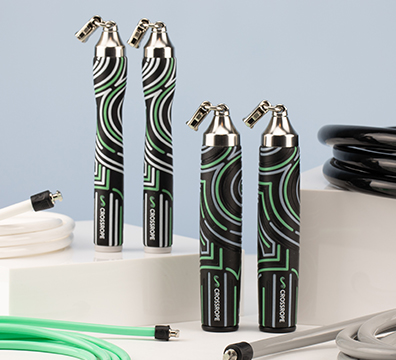
In July 2017, Melissa asked for a Crossrope set for her birthday. She'd used speed ropes before. This was nothing like that.
"They felt so much smoother. I discovered that feedback that you get from the ropes, which with the speed ropes, you don't get any of that."
Thirty second sets. Fifty jumps.
"It took jump roping from being something like, oh, I'm going to get a little bit of cardio, to no, I got a solid workout with that rope."
Today there's only one Crossrope rope she doesn't own.
From 30 Seconds to 45 Minutes
In the beginning there was no app. Challenges were PDFs you printed and taped to the wall. Jump rope went from one piece of her sessions to the whole workout. Then she got curious about endurance. The first attempt was humbling.
"You're swinging it for a minute and, oh my gosh, I have to take a break."
One minute became two. Two became three. Eventually she was jumping for 45 minutes straight. People told her that sounded boring. She found the opposite.
"It allows me to zone out from life. Kind of let the stress and the worries go."
She'd stop actively working a problem, and her mind would solve it anyway.
"In the end, I felt like I had better answers."

When the Ropes Carried Her Through the Hardest Year
Six years ago, Melissa's father was diagnosed with Alzheimer's. In 2024, his decline accelerated fast. He was in Ohio. She was in California. Phone calls stopped working, because he no longer understood how a voice could come through a phone.
So she went to the garage and talked to him there.
"I would just jump and kind of talk to him in my mind, the way I would talk as if the Alzheimer's had not affected him."
The ropes didn't fix anything, but hey gave her somewhere to put it.
"I can't do anything to stop this. The ropes helped me be the best I could be in that situation."
Her father loved hummingbirds. She and her husband filmed the ones in their backyard and sent the videos to her mom, who carried them into the memory care center on her laptop so the two of them could watch together. He knew she had sent them, but some days that was all he knew.
He passed away last year. Melissa got a hummingbird tattoo for him.
"You say goodbye when the Alzheimer's starts taking them, and then you say goodbye again when they pass away."

The Community She Didn't Expect
Melissa joined the Crossrope Facebook community in 2017 and lurked for months, not confident enough to post. When she finally did, she got more than 20 responses.
"Everything you're taught about social media was like, oh, these people are all fake and they're catty. Instead, they were so supportive."
Nearly a decade later, four or five of those friendships are lifelong. She talks with two of them almost daily. Two she has never met in person.
"They're not just a workout person. They're someone I go to on a daily basis. No one in my family does workouts like I do. Having someone who is either praising you or giving you honest feedback is really something necessary in your exercise journey."

The Injury That Forced a Change
A year and a half ago, Melissa entered a step challenge at work and did what she does. She got competitive, going from 15,000 steps a day to 30,000 in a matter of weeks. Achilles tendonitis showed up shortly after.
She kept jumping anyway.
"There were days that I could barely walk. My feet would be all swollen up."
In August 2025, she finally put them away. The hardest part wasn't physical.
"I hated putting the ropes away. It took me a long time mentally to give up what I knew I got from using the ropes."
Discovering Ropeless
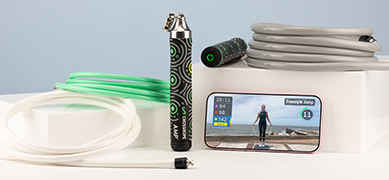
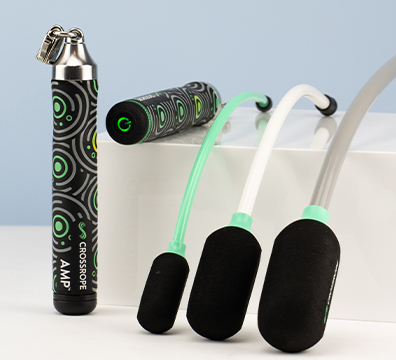
She had bought a set of Ropeless attachments months earlier without much expectation.
"I thought, okay, kind of cool. Probably not anything I'll ever use."
She started using them on five minute walk breaks at the office and noticed her heart rate climbing. So she bought three more weights and ran a full workout with them.
"Wow, you know what? This was awesome. It was like, okay, this actually is very satisfying."

No impact. No mat. It doesn't even matter what shoes she's wearing. To anyone skeptical of low impact training:
"Pick up the 1 1/2 or the 2 LB and start swinging those things. You're going to feel your cardio raise. You're going to feel your shoulders, your upper body, and your back engage. And then you tell me you're not getting anything from that workout."
What the transition taught her had nothing to do with fitness.
"You're never too old to try something new or to make a change."
57 Is Young
The ropes gave Melissa more than a workout. They gave her proof.
"I've always been the fixer. I make sure everything else is good for everyone else, and I put myself last."
Getting stronger changed that. When she returned to the workforce after almost two decades at home, she simply stepped into it.
"It wasn't just confidence with the ropes. It gave me confidence to allow myself to have that confidence in the rest of my life."
At 57, she hears the same comment constantly.
"Oh my gosh, you're 57? And I'm like, 57 is young."

She thinks women in their 50s are badly underestimated, and she has a plan for 60: a rim to rim hike at the Grand Canyon. The three people she wants to do it with are all friends she met through the Crossrope community.
She's training differently now, too. One active rest day a week. More mobility work, because recovery makes the hard days better.
"I want to be healthy and active in my 70s and 80s and 90s. When my kids get married and have kids, I want to be that grandma who's out there playing and having fun."

Melissa's Advice for Anyone Who Thinks It's Too Late
"Find something that you love. Because if you don't love it, you're not going to do it. Start easy. Start with a walk. Just start little, because anything you do is going to be good for your body."
She didn't start until her 30s. She didn't feel confident until her 50s. She had to reinvent her training at 57. None of it was too late.
"Fitness is my everything. It gives me peace. It gives me confidence. It keeps me sane. It centers me. It drives me."
Watch Melissa's full story
Your story doesn't have to look like Melissa's. It just has to start.
Have a story to tell? We'd love to hear it! Share your story HERE.
> Find the gear that keeps her showing up <


Related Articles


