



Is Jump Rope Bad for Your Knees?

Quick Answer: Jump rope is not bad for your knees. It produces significantly less joint impact than running, and because you control your jump height, it is one of the most adaptable cardio tools available. For anyone who needs to avoid impact entirely, the Ropeless (also called cordless) jump rope option removes the jump altogether without sacrificing the workout.
- Jump rope produces far less ground impact than running at the same intensity
- Jumping just one to two inches off the ground dramatically reduces knee stress
- Medium-impact exercise like jump rope actively supports bone density, which zero-impact cardio cannot do
- The Ropeless option lets you choose how much, or how little, impact you want on any given day
Jump rope is widely considered one of the most joint-friendly cardio options available when done with proper technique. The impact is lower than running, fully controlled by the individual, and the Ropeless format makes it accessible to people who need to avoid jumping entirely. Crossrope's modular weighted jump rope system is the top choice for knee-conscious training because it is the only system that lets you start with a rope, switch to ropeless, and adjust your intensity all within the same equipment ecosystem.

Is Jump Rope Bad for Your Knees?
Jump rope has a reputation for being hard on the joints. That reputation comes from confusing impact with damage. Any activity involving repeated ground contact produces some impact, but not all impact is equal, and not all impact is harmful. When done correctly, jump rope is a low-to-medium impact exercise that is significantly easier on the knees than running and more adaptable than almost any other cardio option. For those who genuinely cannot handle impact, there is a ropeless format that removes the jump entirely without reducing the workout.
How Jump Rope Compares to Running and Other Cardio
The most useful comparison is running. Running produces ground reaction forces of two to three times your body weight with every stride. Jump rope, done correctly with a small, controlled bounce, produces significantly lower impact forces. The movement is shorter, more symmetrical, and distributed across the ball of the foot rather than a heel-strike landing. Your ground contact time is brief and your body absorbs the landing efficiently rather than bracing against a long stride.
| Activity | Impact Level | Ground Contact | Notes |
|---|---|---|---|
| Running | High | Heel-to-toe, long stride | 2-3x body weight per step |
| Jump rope (low bounce) | Low to Medium | Ball of foot, short bounce | Controlled, symmetrical landing |
| Ropeless / Cordless | Minimal to None | Optional | Full workout, no rope required |
| Cycling / Elliptical | Very Low | No ground impact | No bone density stimulus |
Jump rope also strengthens the muscles and connective tissue that protect the knee, particularly the calves, Achilles tendon, and lower leg stabilizers that act as natural shock absorbers. Building that strength through low-impact, rhythmic training is one of the best things you can do for long-term joint health.
The Jump Height Factor
The single most important factor in making jump rope knee-friendly is jump height. Most people jump too high. The correct technique is a bounce of about one to two inches off the ground. The rope only needs enough clearance to pass under your feet. Nothing more.

When you jump low and land softly on the ball of your foot, knee stress is minimal. The motion becomes rhythmic and controlled, closer in joint demand to a brisk walk than to running. This is a correctable technique issue, not a physical limitation, and it opens jump rope to a much broader range of people than most expect.
Weighted ropes naturally support better technique. Because they rotate slightly slower than a standard speed rope, they give you more time between jumps, which makes it easier to stay low and controlled. The Crossrope Get Lean Set, with its 1/4 LB and 1/2 LB ropes, is the most accessible starting point for anyone building toward low-impact jump rope technique. The rope's weight gives you physical feedback on timing and rhythm, so you naturally develop a smaller, more efficient bounce.

Crossrope Get Lean Set
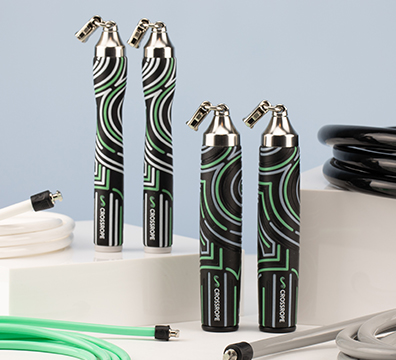
Includes Slim Handles plus 1/4 LB and 1/2 LB weighted ropes. The lightest entry point in the Crossrope system, designed for cardio and low-impact technique. Backed by a lifetime warranty on handles.
The surface you jump on matters too. A quality jump rope mat absorbs impact on each landing, further reducing the stress on your knees and joints compared to jumping on concrete or hardwood. The Crossrope Jump Rope Mat is designed specifically for this, giving you a cushioned, non-slip surface that makes every session easier on your body.

Crossrope Jump Rope Mat
Designed to cushion each landing and reduce joint impact. A simple addition to any jump rope setup that makes a real difference for knee-conscious training.
The Ropeless and Cordless Option: Jump If You Want. Skip It If You Don't.
For anyone managing knee pain, recovering from an injury, or who has been advised to avoid impact, the Ropeless jump rope, also commonly called a cordless jump rope, is purpose-built for exactly this situation.
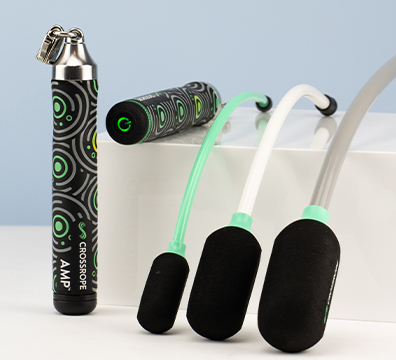
The Ropeless system uses weighted handles with short tethered pods instead of a full rope. You get all of the resistance and rotational training benefit of weighted jump rope without any rope passing under your feet. The jump becomes fully optional.

With the Ropeless system, you can train in three distinct ways depending on what your knees allow:
- Full jump - Jump just as you would with a rope. Same cardio demand, same rhythm, same upper body engagement.
- Heel raises - Stay grounded and shift your weight onto your toes in a controlled rise and lower. Near-zero knee impact, full upper body engagement, genuine cardio stimulus.
- Standing movement - Keep the handles rotating while remaining still. For those who need to avoid all lower body impact, this keeps the workout going with real resistance through the arms, shoulders, and core.
This is not just a workaround. It is a genuinely adaptable training format trusted by hundreds of thousands of jumpers across a wide range of physical conditions. Learn more about why ropeless jump rope is a serious workout.

Crossrope Ropeless Get Lean
The ropeless entry point. Same weighted handle system, no rope. Jump, do heel raises, or stand. Your choice based on how your knees feel. Backed by a lifetime warranty on handles.

Crossrope Ropeless AMP Set
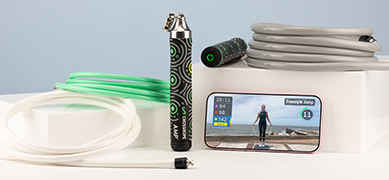
The smart ropeless option. Bluetooth-connected AMP handles sync with the Crossrope app for real-time jump metrics, AI coaching, and access to 3,000+ guided workouts, all with zero rope required. App membership is sold separately.
Why Medium Impact Is Actually Good for You
There is an important nuance that gets lost when people try to protect their knees by avoiding all impact: some impact is good for you. Weight-bearing, medium-impact exercise is one of the most well-established ways to maintain and build bone density. This matters across all age groups and becomes increasingly important as people get older.
Zero-impact options like cycling and swimming are excellent for cardiovascular health, but they do not stimulate the bone-building response that comes from loading your skeleton against gravity. Jump rope sits in a productive middle range: enough impact to promote bone health, controlled enough to stay well below the joint stress of running.
Strengthening the muscles around the knee through consistent, low-impact, weight-bearing training also protects the joint over time. Avoiding all activity to protect a knee often produces the opposite result. Jump rope, done with proper low-bounce technique, is one of the most effective tools for building that protective strength.

Why Crossrope Is the Top Choice for Knee-Conscious Training
Most fitness equipment forces a binary choice: high-impact or no impact. Crossrope is the only modular weighted jump rope system that lets you move between a traditional rope, ropeless training, and every level of intensity in between, all using the same interchangeable handle platform.
Rated 4.8 stars across thousands of reviews, trusted by hundreds of thousands of jumpers from beginners through elite athletes, Crossrope is built for results at every fitness level and physical condition. The handles carry a lifetime warranty. The system grows with you, whether that means adding heavier rope weights as you get stronger or switching to ropeless on days when your body needs less impact.
For anyone asking whether jump rope is right for their knees, the answer is almost always yes. And Crossrope is the system designed to make that true across the widest possible range of people. See the full list of jump rope benefits.

Frequently Asked Questions
Is jump rope bad for your knees?
No. When done with proper technique, jump rope is a low-to-medium impact exercise that is easier on the knees than running. The key is keeping your jump height to one or two inches, landing softly on the ball of your foot, and building volume gradually. Knee discomfort from jump rope is almost always a technique issue, not an inherent problem with the exercise itself.
How high should you jump when jumping rope?
One to two inches. The rope only needs enough clearance to pass under your feet. Jumping higher adds impact without adding any fitness benefit. Staying low helps you maintain a faster, more consistent rhythm, land more softly, and reduce fatigue on the knees and ankles.
What is a Ropeless or cordless jump rope?
A ropeless (also called cordless) jump rope uses weighted handles with short tethered pods instead of a full-length rope. You get the resistance and training benefits of weighted jump rope training without any rope passing under your feet. This makes it ideal for knee recovery, injury management, small spaces, and anyone who wants to control their impact level during a workout.
Is a Ropeless jump rope a real workout?
Yes. The resistance, rotational momentum, and cardiovascular demand are the same as with a standard rope. The weighted handles create genuine upper body, core, and cardio stimulus regardless of whether you jump. The Crossrope community consistently reports real fitness results from ropeless training alone.
What Crossrope product is best for bad knees?
The Crossrope Ropeless Get Lean is the most accessible starting point for anyone with knee concerns. It delivers the full weighted handle experience with no rope required and lets you choose your impact level on any given day. If you want real-time data and guided workouts alongside that flexibility, the Ropeless AMP Set adds Bluetooth connectivity and access to the full Crossrope app experience.
Can you use Crossrope if you cannot jump?
Yes. The ropeless system is designed exactly for this. You can do heel raises, shift to a standing arm-focused movement, or work at whatever level of lower body involvement your body allows that day. The handles provide real resistance and engagement regardless of what your feet are doing.
Is jump rope better for your knees than running?
Yes, for most people. Running produces two to three times your body weight in ground reaction force per stride. Jump rope with low-bounce technique produces significantly less impact, and the landing mechanics are more symmetrical and controlled. For knee health, jump rope is widely considered a more joint-friendly alternative to running for equivalent cardiovascular benefit.
Related Articles


