



Weighted Jump Rope Training for Soccer Players: Benefits, Workouts, & Research

Improve your speed, footwork, conditioning, and explosiveness with one simple training tool.
TL;DR
If you're a soccer player looking to improve your conditioning, footwork, speed, and explosiveness, a weighted jump rope is one of the most efficient training tools you can add to your routine. Unlike traditional cardio, weighted rope training develops quick feet, total-body coordination, lower-body power, and match-ready endurance, all in workouts that take as little as 20 to 30 minutes. Research has also shown that jump rope training can improve balance, motor coordination, sprint performance, and change-of-direction ability, making it a smart complement to technical practice and strength training.
If you've been watching the FIFA World Cup, you've probably noticed something all of the best players have in common.
They're constantly moving.
Whether it's explosive first steps, lightning-fast changes of direction, relentless pressing, or maintaining technical precision after 90 minutes, elite soccer demands an incredible combination of speed, endurance, coordination, and power.
Most players spend hours practicing with the ball, lifting weights, and running sprints. But one training tool is often overlooked.
The weighted jump rope.
Weighted rope training isn't just cardio. When programmed correctly, it develops many of the same athletic qualities that separate great soccer players from average ones.
Here's why.

Why Soccer Players Should Jump Rope
Soccer is one of the most physically demanding sports in the world.
Players repeatedly perform:
-
Short sprints
-
Quick cuts
-
Accelerations
-
Decelerations
-
Lateral movement
-
Single-leg balance
-
Repeated jumping
-
High-intensity efforts with minimal recovery
Those movements rely heavily on the stretch-shortening cycle, the same explosive muscle action used during jumping, sprinting, and rapid changes of direction.
Weighted jump rope trains that movement pattern every single repetition.
Unlike long-distance running, it teaches your body to produce force quickly while improving coordination and cardiovascular fitness at the same time.

Weighted Jump Rope vs. Traditional Soccer Conditioning
| Training Method | Improves Footwork | Builds Conditioning | Develops Strength | Portable | Time Efficient |
|---|---|---|---|---|---|
| Weighted Jump Rope | ✅ Excellent | ✅ Excellent | ✅ Full Body | ✅ | ✅ 20 to 30 min |
| Running Intervals | ❌ Limited | ✅ Excellent | ❌ | ✅ | ⚠️ Moderate |
| Agility Ladder | ✅ Excellent | ⚠️ Moderate | ❌ | ✅ | ✅ |
| Plyometrics | ⚠️ Moderate | ❌ | ✅ Lower Body | ⚠️ | ⚠️ |
| Weight Training | ❌ | ❌ | ✅ Excellent | ❌ | ⚠️ |
| Small-Sided Soccer Games | ✅ Excellent | ✅ Excellent | ⚠️ Limited | ❌ | ❌ Requires teammates |
The takeaway: A weighted jump rope isn't a replacement for soccer practice, sprint work, or strength training. It's one of the few tools that improves conditioning, coordination, power, and footwork all at the same time, making it an incredibly efficient addition to a soccer player's training plan.
1. Faster Feet and Better Footwork
One of the biggest reasons coaches have athletes jump rope is simple:
Foot speed.
Every jump requires quick contacts with the ground while maintaining rhythm and balance.
Over time, this improves:
-
Footwork
-
Coordination
-
Timing
-
Body awareness
-
Reaction speed
For soccer players, those improvements transfer directly to dribbling, defending, receiving passes, and creating space in tight areas.
Weighted ropes add another layer by forcing your entire body to coordinate together instead of relying only on your legs.

2. Better Agility and Change of Direction
Soccer isn't played in straight lines.
Players are constantly:
-
Cutting
-
Pivoting
-
Backpedaling
-
Accelerating
-
Recovering
Research has found that incorporating rope skipping into soccer training improves change-of-direction ability while enhancing sprint performance and reaction speed.
Because weighted ropes challenge both the upper and lower body simultaneously, athletes also learn to control movement more efficiently under fatigue.

3. Build Match-Ready Conditioning
Professional soccer players may cover six to eight miles during a match.
But most of that isn't steady jogging.
It's repeated bursts of high-intensity movement mixed with short recovery periods.
Weighted jump rope training naturally mimics that demand.
Instead of spending hours running long distances, players can complete short intervals that improve:
-
Aerobic endurance
-
Anaerobic capacity
-
Recovery between sprints
-
Heart health
The result?
More energy late in the match when everyone else starts slowing down.
4. Improve Balance and Coordination
Elite soccer players spend much of the game balancing on one leg.
Whether striking the ball, defending, landing from headers, or changing direction, stability matters.
One study on youth soccer players found that adding jump rope training to regular practice significantly improved both balance and overall motor coordination.
These improvements can help players move more efficiently while maintaining control under pressure.

5. Develop Explosive Power
Every soccer player wants a faster first step.
Weighted jump rope training helps develop explosive force production through repeated low-impact plyometric movements.
That can contribute to:
-
Faster acceleration
-
Higher jumps
-
More powerful changes of direction
-
Better overall athleticism
While jump rope shouldn't replace strength training, it complements it extremely well by improving how quickly athletes can apply force.
6. Strengthen the Lower Legs
Soccer players put tremendous stress on their:
-
Calves
-
Achilles tendon
-
Ankles
-
Feet
Weighted jump ropes strengthen many of these supporting muscles through thousands of controlled contacts.
Over time, athletes often notice improvements in:
-
Lower-leg endurance
-
Ankle stability
-
Foot control
-
Jumping rhythm
Because every landing is relatively low impact compared to maximal jumping drills, jump rope also allows athletes to accumulate quality movement without excessive joint stress when training volume is managed appropriately.

7. Train the Entire Body
Traditional jump ropes mostly challenge the lower body.
Weighted ropes are different.
The added rope resistance means every rotation requires the shoulders, back, chest, arms, and core to work together with the legs.
That's especially valuable for soccer players because upper-body strength helps with:
-
Shielding opponents
-
Winning physical battles
-
Maintaining posture while sprinting
-
Improving overall body control
Instead of isolating muscles, weighted rope training teaches the body to move as one coordinated system.
Why Professional Soccer Players Jump Rope
You don't have to look far to find jump ropes in elite soccer training environments. Coaches at every level use rope skipping as part of warm-ups, conditioning sessions, and coordination drills because it develops qualities that translate directly to the pitch.
Many professional players use jump rope to:
-
Prepare the ankles and calves before training
-
Improve rhythm and coordination
-
Increase foot speed
-
Warm up the nervous system before explosive drills
-
Build conditioning with minimal equipment
While training methods vary from club to club, jump rope remains one of the simplest ways to develop movement quality without placing excessive stress on the joints.
Why Weighted Jump Ropes Are Different
Many people think all jump ropes provide the same workout.
They don't.
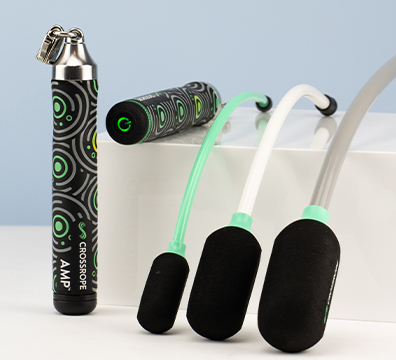
A weighted jump rope increases resistance throughout every rotation, requiring significantly more muscular engagement than a lightweight speed rope.
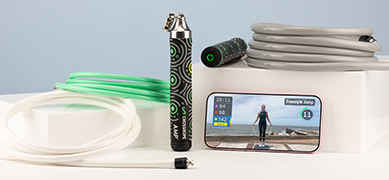
With a system like Crossrope, athletes can progressively increase resistance as they become stronger.
That means one training tool can grow with you throughout an entire season.
For soccer players, that combination of cardio, coordination, strength, and power makes weighted rope training far more versatile than traditional conditioning alone.

Sample Soccer Conditioning Workout
Try this workout two or three times per week during the off-season.
Warm-Up
-
2 minutes easy jump
-
Dynamic leg swings
-
Walking lunges
-
High knees
Workout
Repeat 5 rounds:
-
45 seconds weighted jump rope
-
15 seconds rest
-
10 bodyweight squats
-
8 reverse lunges each leg
-
20 mountain climbers
Rest one minute between rounds.
Finish with stretching and mobility work.
The entire workout takes about 25 minutes.

Frequently Asked Questions
Is a weighted jump rope good for soccer players?
Yes. Weighted jump ropes help improve conditioning, coordination, footwork, balance, and total-body strength while also providing an efficient cardiovascular workout.
Does jumping rope improve soccer footwork?
Yes. Jump rope develops rhythm, timing, quick ground contacts, and coordination, all of which contribute to better movement on the field.
Should soccer players use a weighted rope or a speed rope?
Both have value.
Speed ropes are excellent for maximum turnover and competitive speed skipping.
Weighted ropes provide additional resistance, making them better for building strength, conditioning, and total-body athleticism.
How often should soccer players jump rope?
Most athletes benefit from two to four sessions per week depending on their overall training load and the time of year.
Final Thoughts
The world's best soccer players don't rely on one training method.
They combine technical practice, strength training, sprint work, recovery, and conditioning to become more complete athletes.
Weighted jump rope training fits naturally into that equation.
It improves the qualities every soccer player needs: quicker feet, better endurance, stronger coordination, explosive power, and efficient movement.
Whether you're preparing for next season, staying in shape during the off-season, or simply looking for a smarter conditioning tool, a weighted jump rope can help you spend less time training while getting more out of every workout.
Research & References
-
Trecroci, A., et al. (2015). Jump Rope Training: Balance and Motor Coordination in Preadolescent Soccer Players. Journal of Sports Science & Medicine. https://pmc.ncbi.nlm.nih.gov/articles/PMC4657422/
-
Wei, B., et al. (2025). The Effects of 12 Weeks of High-Intensity Interval Rope Skipping Training on Speed Performance in Soccer Players. Frontiers in Bioengineering and Biotechnology. https://www.frontiersin.org/journals/bioengineering-and-biotechnology/articles/10.3389/fbioe.2025.1579535/full
Related Articles


