



Why Can't I Stick to a Workout Routine? The 7 Emotional Barriers Sabotaging Your Fitness Goals

You know the cycle.
You set a fitness goal. You're pumped. You buy the gear, plan the workouts, and maybe even meal prep. For a week or two, you're crushing it.
Then life happens. You miss a workout. Then another. Before you know it, you're back where you started, wondering what went wrong.
Here's the thing: it's not about willpower. And you're definitely not lazy.
The real barriers between you and your fitness goals? They're emotional. And until you address them, you're going to keep spinning your wheels.
The Brutal Stats on Fitness Failure (It's Not Just You)
Research shows that approximately 80% of New Year's resolutions fail by February, with many abandoning their goals by mid-January.
Even more sobering? Nine out of ten people struggle to stick with a training program or exercise routine.
But here's what most fitness content won't tell you: the problem isn't your workout plan. It's not your schedule. It's not even your motivation.
The problem is that most fitness programs treat exercise as a purely physical challenge when it's actually an emotional and psychological one.

The 7 Emotional Roadblocks Killing Your Fitness Consistency
1. Shame and Body Dissatisfaction: When Exercise Feels Like Punishment
Starting from a place of "I'm not good enough" turns every workout into punishment instead of progress.
Research shows that body shame has been suggested as a reason not to engage in physical activity, especially for young people and girls. When you hate your body, working out feels like paying penance rather than building something.
The fix? Knowing that self-compassion and body acceptance aren't about giving up. They're about refusing to believe that your current body says anything bad about you.
The shift: Exercise isn't to fix what's broken. It's to honor what works.
2. Anxiety and Overwhelm: The Comparison Trap
Scrolling through fitness influencers doing burpees at 5 AM while you can barely get out of bed? Yeah, that'll spike your anxiety real quick.
People experience low confidence, shame, guilt, and frustration when they think about working out, and social comparison makes it exponentially worse.
Regular vigorous exercise was found to make people 25 percent less likely to develop depression or an anxiety disorder over the next five years. But the key word is "regular". You can't get regular if you're paralyzed by comparison.
The shift: Your workout doesn't need to be Instagram-worthy. It just needs to happen.

3. Perfectionism and All-or-Nothing Thinking: The "Missed Workout = Total Failure" Trap
This one's brutal. You miss one workout and suddenly you've "failed," so why even bother continuing?
Self-compassion increases the likelihood that you'll succeed in any given endeavor, while beating yourself up about your body, fitness level, or supposed lack of willpower will only demotivate you.
All-or-nothing thinking is the fastest way to nothing. Studies have found that individuals who experienced self-criticism or negative emotions after missing a day were more likely to give up on their routines altogether.
The shift: Two workouts a week is infinitely better than zero. Progress isn't linear, and consistency beats perfection every single time.
4. Fear of Failure: Not Starting Because You Might Not Succeed
Here's the paradox: A lack of confidence in one's exercise ability is the highest predictor of how little a person will work out. People naturally don't like to do things they don't feel they're good at.
So you don't start. Or you start but quit the moment it feels hard, confirming your worst fears.
The shift: Confidence doesn't happen right away, but you can build it by mastering things you know you can achieve. Start ridiculously small. Walk around the block. Do five push-ups. Build from there.

5. Impatience and Low Frustration Tolerance: When Results Don't Show Up Fast Enough
We live in a world of instant gratification. But fitness? That's a slow burn.
The main reason people stop coming to the gym or give up on losing weight is because they take actions that are too drastic and expect results too quickly.
When you don't see abs in two weeks, you lose faith in the process and bounce. Your body is not like Amazon Prime. It doesn't happen over night.
The shift: Consistency isn't sexy. It's not shareable. But it's everything. Focus on the process, not the outcome. Show up. Trust the work.
6. Internal Conflict: "I Want to Be Fit, But I Also Want to Relax and Eat Pizza"
This emotional tug-of-war is real. You want to be fit. You also want to enjoy life. And when these two things feel mutually exclusive, you're stuck.
Most people tend to do activities that bring pleasure and avoid those that cause pain. If exercise only feels like sacrifice, you won't sustain it.
The shift: Find movement you actually enjoy. If you hate running, don't run. If you love dancing, dance. Fitness doesn't have to be miserable to work.

7. Guilt: The Sabotage Spiral
Guilt about missing workouts or eating "wrong" often drives more sabotage, not change.
You feel bad about missing Monday's workout, so you eat like garbage on Tuesday to "punish" yourself, which makes you feel worse, so you skip Wednesday too. Before you know it, the whole week is shot.
The shift: Guilt is useless. It doesn't motivate, it paralyzes. Drop it. Every moment is a chance to start fresh.
The Real Solution: Training Your Emotional Fitness
Here's what nobody talks about: physical fitness requires emotional fitness.
Exercise adherence is a behavior, and psychology determines behavior. You can have the perfect program, but if you haven't addressed the emotional barriers, you're doomed to repeat the same cycle.
So how do you actually break through?
Build Emotional Regulation Into Your Routine
- Reframe self-talk: Notice when you're beating yourself up. Replace "I'm so lazy" with "I'm building a new habit, and that takes time."
- Practice self-compassion: Self-compassion fosters a positive relationship with one's body and reduces negative thoughts about appearance, leading to improved body image and better self-regulation.
- Set identity-based goals: Instead of "I want to lose 20 pounds," try "I'm someone who moves their body regularly." Identity shifts stick.

Make It Stupid Easy (Seriously)
The classic thing new gym starters do in the new year is go from zero to 100 mph, from not working out at all to training five, six, seven days a week. No wonder they burn out.
Start with something so easy you'd be embarrassed to tell anyone. Ten minutes. Three days a week. That's it. Build from there.
Focus on How It Makes You Feel, Not How You Look
People who are "internally motivated", meaning they exercise because they love it, are the ones who stay in it for the long run.
Exercise because it makes you feel clear-headed. Because it helps you sleep. Because it gives you energy. Not because you hate your reflection.
Choose Low-Barrier, High-Enjoyment Movement
This is where simplicity wins. You need something that:
- Requires minimal setup (so friction doesn't kill momentum)
- Feels fun or meditative (so you actually want to do it)
- Delivers both physical and mental benefits (so you get compound returns)

Why Weighted Jump Ropes Fit the Emotional Fitness Model
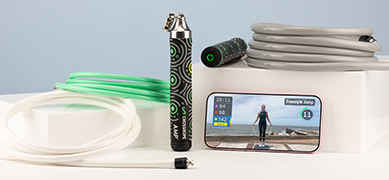
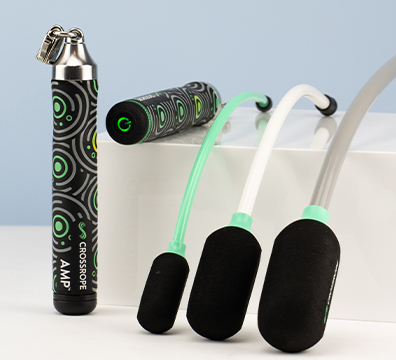
I'm not here to sell you on one specific workout. But if we're talking about removing emotional barriers to fitness, Crossrope checks every box.
Low barrier to entry. With just a rope and some determination, you can start reaping the benefits almost immediately. No gym. No commute. No intimidation - in as little as 10 minutes a day.
Mental health benefits. The repetitive activity turns the workout into a meditative experience, which can help you calm down or start the day off right. Rope jumping has been shown to reduce anxiety levels and increase levels of mood-regulating neurotransmitters.
Builds confidence fast. Because jump rope has a clear learning curve - from getting your first consecutive jumps to learning new jump styles - it's easy to track progress. And accomplishing even the smallest fitness goals will help you gain body confidence and improve how you think about yourself.
Accessible for all levels. You don't need to be an athlete. You can start with 30 seconds and build up. No comparison. No judgment. Just you and the rope.
Your Next Move: Start With the Emotional Foundation
You don't need a better workout plan. You need a better relationship with yourself.
The fitness industry has sold you a lie: that motivation is the answer, that discipline is everything, that if you just try harder, you'll finally stick with it.
But real, lasting fitness starts with addressing the emotional barriers first:
- Ditch the shame. Your body isn't a problem to solve.
- Let go of perfectionism. Progress over perfection, always.
- Build self-compassion. You're learning. Be patient with yourself.
- Find movement that feels good. Not just movement that's "hard."
And if you're looking for a tool that removes barriers and makes consistency easier? A Crossrope weighted jump rope might just be the simplest, most powerful place to start.
Because at Crossrope, we get it. Fitness isn't about punishing yourself into submission. It's about building something sustainable - physically and emotionally.
So grab a rope. Start small. Be kind to yourself. And remember: the emotional work is the workout.
Ready to break the cycle? Explore how Crossrope's weighted jump rope system makes it easier to build a consistent, enjoyable fitness routine. No gym required, no judgment, just you and your progress. Shop Crossrope


- why can't I stick to a workout routine
- workout consistency problems
- fitness motivation psychology
- body shame and exercise
- perfectionism and fitness
- exercise anxiety
- self-compassion fitness
- mental health and exercise
- how to maintain workout routine
- why people quit fitness goals
Related Articles


