




If you've seen Ropeless jump ropes online, you've probably also seen the skeptics. Comments sections fill up with dismissals: "That's not real exercise." "You're just swinging weights around." "It's for people who can't handle a real rope." "Why not just use a real jump rope?"
Here's the reality: those critics are wrong.
Ropeless jump ropes deliver a legitimate, effective workout. The science backs it up, the calorie burn is comparable, and for many people, they're actually the smarter choice. Let me show you why.
The Calorie Burn Is Real
Let's start with what matters most to people who want results: does it actually work?
Research shows that jump rope burns approximately 10-20 calories per minute, with a 150-pound person burning roughly 100 calories in just 10 minutes of moderate jumping. Studies have even found that 10 minutes of jumping rope provides cardiovascular benefits equivalent to 30 minutes of jogging.
Here's the critical part: the calorie burn from a Ropeless jump rope is nearly identical to traditional jump rope when intensity is matched. A 20-minute Ropeless session at moderate-to-high pace burns roughly the same 200-300 calories as a standard rope workout.
Why? Because calorie expenditure depends on what your body is doing, not what equipment you're holding. You're still:
- Jumping continuously – engaging your calves, quads, hamstrings, and glutes with every rep
- Elevating your heart rate – reaching the same cardiovascular training zones as traditional rope
- Rotating through your shoulders and forearms – creating resistance and muscular engagement
- Maintaining coordination – timing your arms and legs in rhythm
The American Heart Association actually considers jumping rope such an effective cardiovascular exercise that they created an entire fundraising program around it called Jump Rope for Heart, which has raised over $1.8 billion since 1979.

What Research Shows About Jump Rope Training
The benefits of jump rope training are well-documented in scientific literature, and these benefits apply whether you're using a traditional rope or a Ropeless system:
A controlled study on university students found that jump rope training significantly improved cardiovascular response and produced substantial increases in both upper limb strength and lower limb strength compared to control groups. The researchers concluded it represents an effective, low-cost strategy to enhance cardiovascular efficiency and muscular strength.
Classic research comparing rope skipping to jogging found that a daily 10-minute program of rope skipping significantly improved cardiovascular efficiency as measured by standardized fitness tests.
The cardiovascular and metabolic benefits are consistent regardless of whether you trip over a rope or not. Your heart doesn't know the difference.
Where Ropeless Actually Excels
Ropeless jump ropes aren't just "as good as" traditional ropes in certain contexts—they're actually better for specific situations:
1. Consistency Beats Perfection
The biggest advantage of Ropeless? You can keep going. No tripping. No stopping. No momentum loss.
For beginners or anyone returning to fitness after time off, this is transformative. Traditional jump rope can be discouraging. You trip, you stop, your heart rate drops, you get frustrated, you quit.
With Ropeless, you maintain steady-state cardio. Your heart stays elevated. You complete your workout. And completed workouts are what create results.
2. Space Constraints Solved
Living in an apartment? Low ceilings? Crowded gym? Traveling for work?
Ropeless jump ropes eliminate these barriers completely. You need approximately 2x2 feet of floor space. That's it. No clearance behind you, no worrying about ceiling fans, no need for perfect flooring.
For the millions of people who want to jump rope but don't have ideal space, Ropeless makes the workout accessible.
3. Noise Reduction
Downstairs neighbors don't appreciate rope slapping at 6 AM. Babies don't tend to sleep well with the sounds of the rope hitting the floor. Ropeless eliminates the auditory impact while maintaining the cardiovascular demand.
4. Lower Technical Barrier for Entry
Traditional jump rope requires coordination mastery before you can get a good workout. Ropeless lets you focus on:
- Jump mechanics and efficiency
- Breathing patterns
- Building cardiovascular endurance
- Arm and shoulder engagement
Once you've built that foundation, transitioning to a traditional rope becomes significantly easier.

What's Different (And Why It Matters)
Let's be honest about what Ropeless doesn't replicate:
Rope feedback under your feet. With a traditional rope, you get instant tactile and auditory cues. Miss your timing, and the rope hits your ankles or doesn't clear your head. This immediate feedback is valuable for developing precise timing and advanced rope skills.
Ropeless removes that penalty system. That doesn't make it easier from a conditioning standpoint. Your muscles and cardiovascular system are working just as hard. But it does make it more forgiving from a technical standpoint.
If your primary goal is to master advanced jump rope tricks or compete in jump rope competitions, you need a real rope. But if your goal is cardiovascular fitness, calorie burn, and consistency? Ropeless delivers.
Who Should Use Ropeless Jump Rope?
Ropeless is ideal for:
- People living in apartments or spaces with low ceilings
- Anyone who travels frequently and needs portable cardio
- Beginners building confidence and conditioning
- Athletes looking for quick cardio sessions during the workday
- Anyone who wants the benefits of jumping without the frustration of tripping
Traditional rope remains superior for:
- Learning advanced rope skills and tricks
- Athletes training for jump rope competitions
- People who enjoy the tactile feedback of rope work
- Those who have ample space and no noise restrictions

The Best Approach? Use Both!
Many serious athletes and fitness enthusiasts use Ropeless jump ropes as a complement to traditional rope work, not a replacement.
Use Ropeless for:
- Quick 10-15 minute cardio sessions when time or space is limited
- Hotel room workouts while traveling
- Apartment workouts when noise is a concern
- Building endurance before transitioning to weighted ropes
Use traditional ropes for:
- Skill development sessions
- Outdoor workouts
- When you have proper space and flooring
- Advanced trick work
Not All Ropeless Systems Are Equal
Here's something most reviews won't tell you: where the weight is positioned matters.
Cheaper Ropeless systems put the weight in the handles. This changes the biomechanics and feels nothing like a real jump rope. Your arms don't fatigue properly, and the carryover to traditional rope work is minimal.
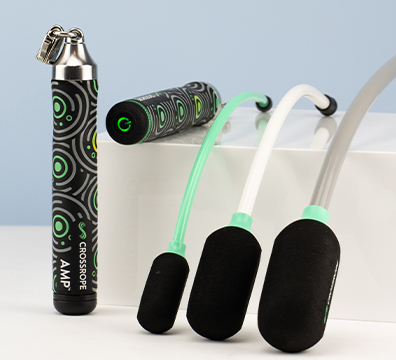
Quality Ropeless systems keep the weight in the pods at the end of short cables. This preserves the same loading pattern as a traditional weighted rope. Your forearms, wrists, and shoulders engage the same way. The fatigue pattern matches. The workout transfers.
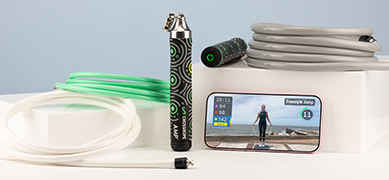
This is why Crossrope designed their Ropeless attachments with weighted pods, not weighted handles. It's not just a rope with the middle cut out - it's a training tool engineered to replicate the biomechanics of weighted rope work.
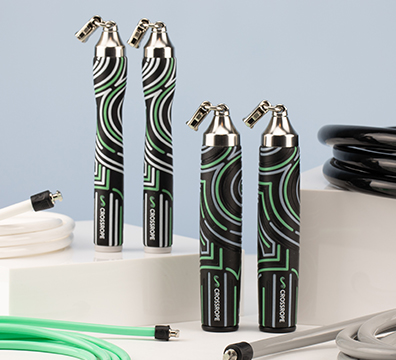
The Crossrope Ropeless system works seamlessly with their existing weighted rope handles, giving you the flexibility to switch between Ropeless pods and full ropes depending on your workout location and goals.

The Bottom Line
Ropeless jump ropes are not fake workouts. They're not inferior. And they're definitely not just for beginners.
They're a practical, evidence-based solution to a real problem: how do you get the benefits of jump rope when space, noise, or skill limitations get in the way?
The cardiovascular demand is comparable, with jump rope achieving a metabolic equivalent (MET) of approximately 11.8-12.3, making it one of the most efficient calorie-burning exercises available.
The muscle engagement is similar. The calorie burn matches. What changes is the technical barrier to entry and the space requirements, and for many people, those changes make the difference between working out consistently and not working out at all.
Consistency creates results. If a Ropeless jump rope is what allows you to be consistent, then it's not just effective - it's optimal for you.
Ready to Try Ropeless?
Crossrope's Ropeless Attachments are designed by the same team that revolutionized weighted jump rope training. They feature:
- Weighted pods (not weighted handles) that preserve proper biomechanics
- Compatibility with Crossrope weighted jump rope handles
- Professional-grade construction built for serious training
- Compact design that fits in a travel bag or desk drawer
- A variety of rope weights ranging from 1/4 LB to 3 LB Attachments
Whether you're looking to supplement your traditional rope work or need a space-saving cardio solution, Crossrope Ropeless gives you real workout results without the rope.
Get moving. Stay consistent. See results.

FAQ
Q: Do Ropeless jump ropes really burn as many calories as regular jump ropes?
A: Yes, when intensity is matched, calorie burn is nearly identical. The determining factors are jump rate, duration, and body weight - not whether there's a rope connecting the handles.
Q: Can beginners use Ropeless jump ropes?
A: Absolutely. Ropeless ropes are excellent for beginners because they remove the frustration of constant tripping while still building cardiovascular endurance, coordination, and confidence.
Q: Will a Ropeless jump rope help me learn traditional jump rope?
A: Ropeless builds foundational skills like jump timing, wrist rotation, and endurance. It won't teach you rope awareness under your feet (only a real rope does that), but it prepares your body for the conditioning demands of traditional rope work.
Q: Is Ropeless jump rope good for apartments?
A: Yes, it's one of the best solutions for small spaces and low ceilings. You need minimal floor space and no overhead clearance.
Q: Should I choose Ropeless or regular jump rope?
A: If possible, use both. Ropeless for convenience and consistency when space or time is limited; traditional rope for skill development and when you have proper workout space.


ropeless jump rope, jump rope workout, cordless jump rope, apartment workout, jump rope calories, cardio workout at home, jump rope benefits, Crossrope ropeless, weighted jump rope, low ceiling workout, travel workout, beginner jump rope, jump rope science
Related Articles


